: Home > Insights >

CONVERSATIONS

Dialogues that support reflection, interpretation, and clarity before decisions are made.

CONVERSATIONS brings together selected video dialogues on management, organization, and leadership. The conversations are drawn from real work with leaders, research contexts, and practical reflection, focusing on understanding organizations before decisions are made or change is initiated. They are shared to support reflection, orientation, and clarity—before action is taken.

Seeing How Organizations Really Work

Seeing How Organizations Really Work

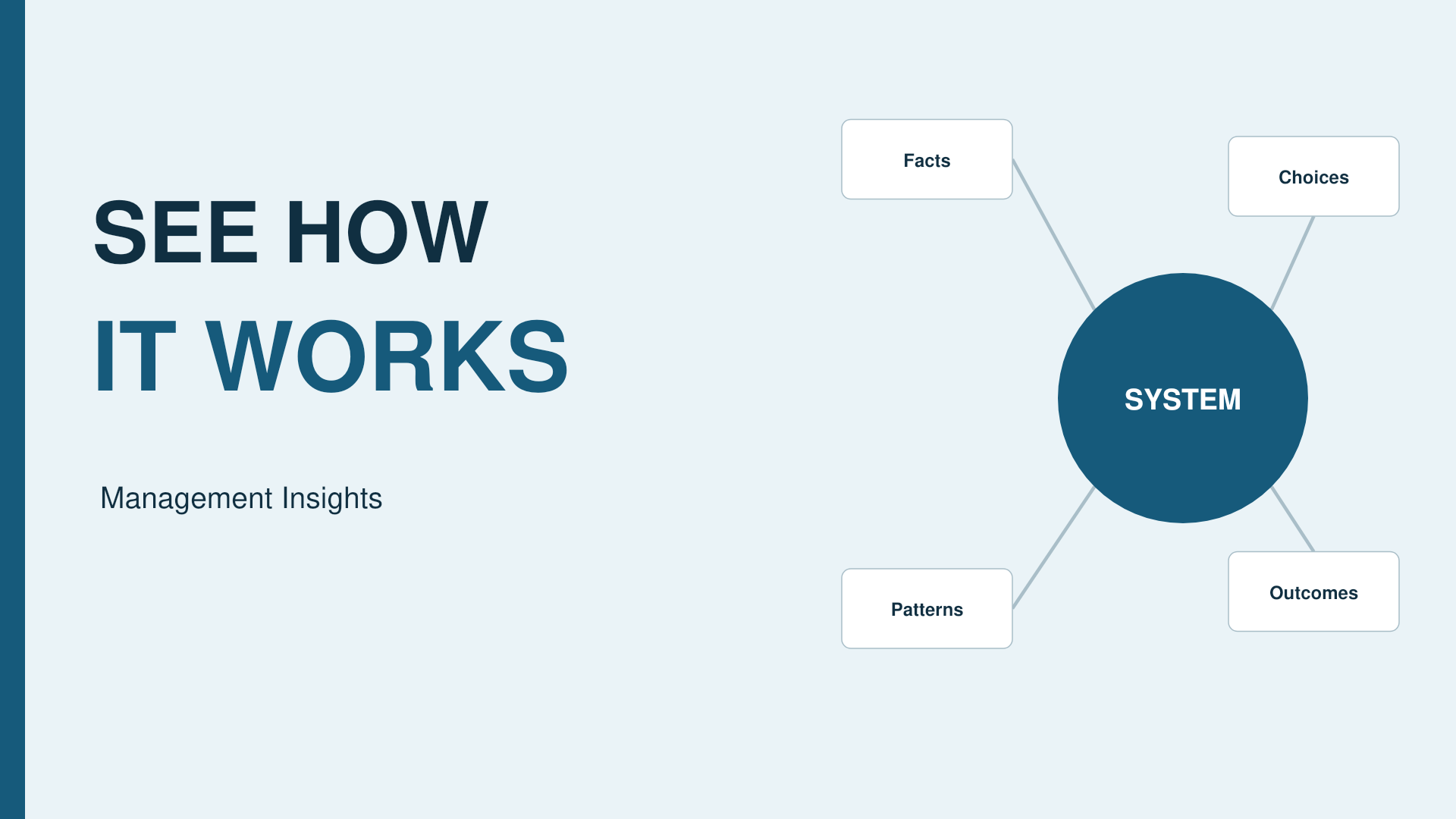
Why do capable people and sound strategies sometimes produce disappointing results?
This video explores the relationships between organizational conditions, choices, and outcomes.
Discover how seeing the organization more clearly can lead to better leadership questions.
Clarity Before Change

Clarity Before Change

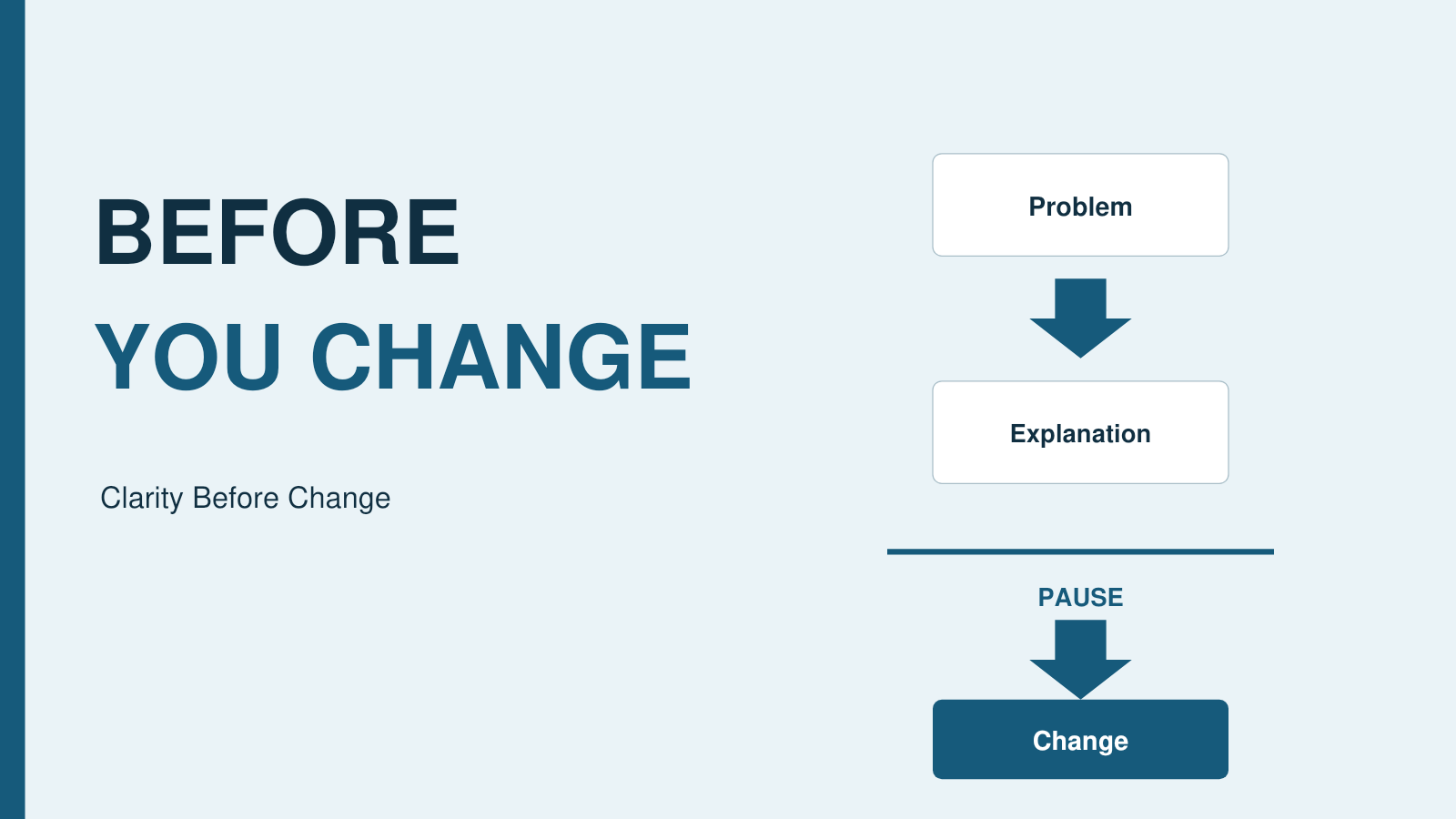
Pressure to act can make the first explanation seem like the right one.
Clarity Before Change helps leaders understand the patterns behind a situation together.
The video shows how that understanding opens more relevant choices before action.

The Organization Twin

The Organization Twin

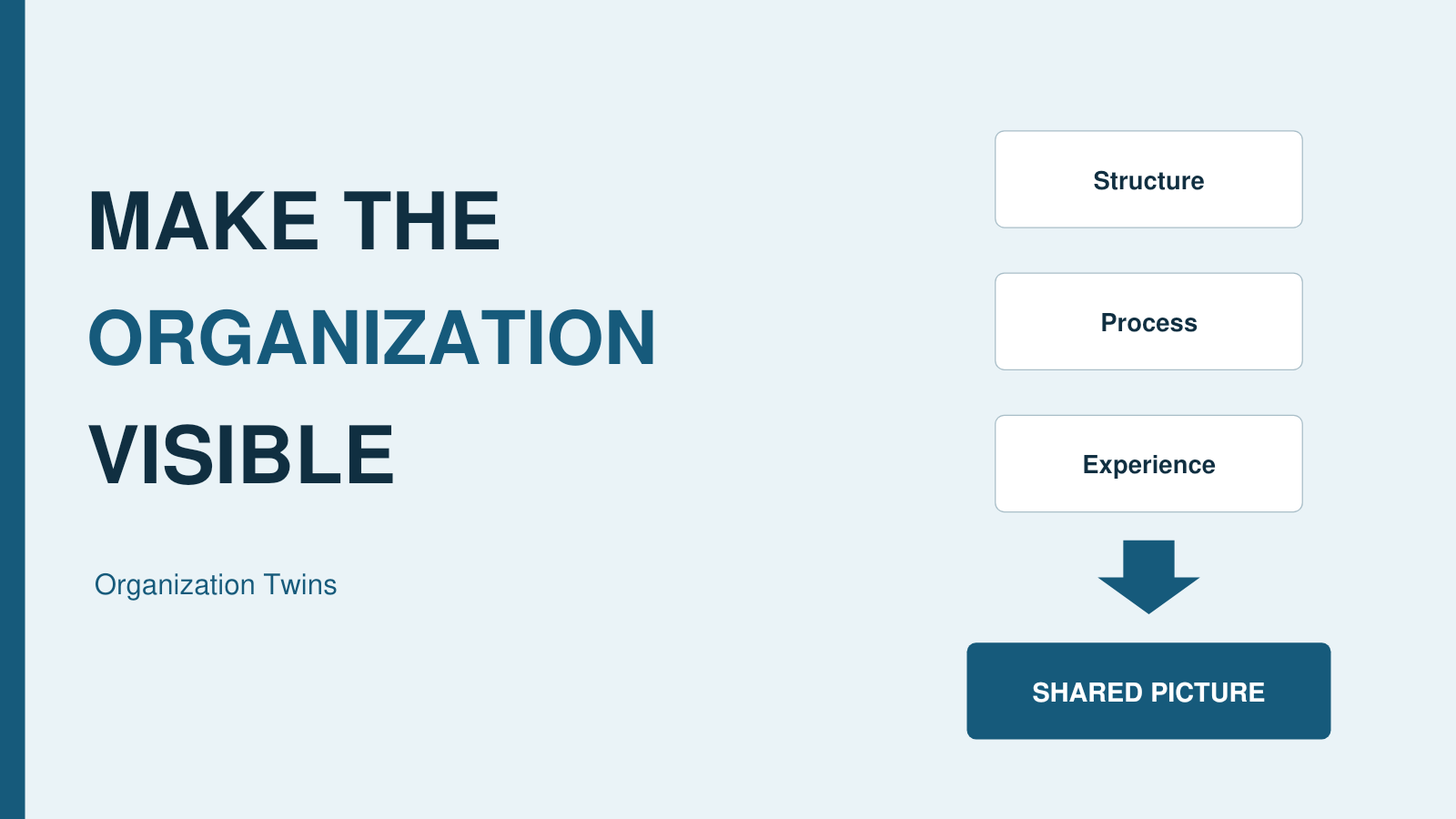
An Organization Twin makes visible how an organization actually works.
It connects formal structures with everyday routines, relationships, and recurring patterns.
See how a shared picture helps leaders reflect and choose what to change.

Structured Reflection

Structured Reflection

A leadership question can become a decision before its underlying assumptions are examined.
Structured Reflection separates observations from interpretations and brings different perspectives into view.
See how a clearer question becomes the starting point for a better conversation.

The Guided Clarity Session

The Guided Clarity Session

A leadership question can become a decision before its underlying assumptions are examined.
Structured Reflection separates observations from interpretations and brings different perspectives into view.
See how a clearer question becomes the starting point for a better conversation.

When to Move

When to Move

Clarity makes the next choice visible, even when uncertainty remains.
Leaders can decide where to move, where to wait, and what capabilities need strengthening.
This video explores how to take a deliberate next step and learn from its effects.

Creating Option Space

Creating Option Space

The first proposed solution is rarely the only possible one.
A clearer view of the organization helps leaders develop several workable options.
See how exploring their consequences expands choice before commitment.

Choosing a Trajectory

Choosing a Trajectory

A direction becomes useful when it connects ambition with the organization as it is today.
Choosing a trajectory means sequencing commitments while leaving room to learn and adapt.
See how leaders can maintain direction without fixing every step in advance.

Learning Through Movement

Learning Through Movement

Action can reveal how an organization responds to change.
Leaders learn when they make assumptions visible, observe the response, and revisit their understanding.
See how deliberate movement turns experience into shared learning.

Mastery Without Perfection

Mastery Without Perfection

Organizational mastery is a continuing practice, rather than a final state.
Seeing, reflecting, conversing, acting, and learning help an organization respond as conditions change.
This video brings the clarity journey together as a practice leaders can sustain.

The 3AM Insights

The 3AM Insights

At 3am, a quiet mind may bring forward a new idea or an unresolved concern.
Capture the thought, revisit it in daylight, and examine what it reveals.
See how a private moment of insight can become a shared leadership conversation.

AI Expands Possibility

AI Expands Possibility

AI can help leaders explore possibilities, but its answers need organizational context.
An Organization Twin makes the patterns of a particular organization available for deeper inquiry.
This video explores how AI could support that work while interpretation and responsibility remain with people.

The 3am Moment of Leadership — Why Clarity Comes Before Change

The 3am Moment of Leadership — Why Clarity Comes Before Change

In this personal reflection, Lukas Michel speaks about the moment many leaders recognize—the early-morning point when responsibility feels heavy and clarity is missing.
The video explores why this moment is not a failure, but a signal that understanding must come before action. It introduces the principle of Clarity Before Change as a way to pause, reflect, and see what is actually happening in the organization. The reflection invites leaders to seek insight before deciding what to change.

Patterns of Mastery — Business Cases, Hidden Patterns, and Mastery in the Digital Economy

Patterns of Mastery — Business Cases, Hidden Patterns, and Mastery in the Digital Economy

In this author conversation, Lukas Michel, Johanna Anzengruber, and Prof. Herb Nold introduce Patterns of Mastery as a book about what can be learned from organizations that work. The video explains how recurring patterns across industries help leaders recognize the conditions that enable performance, innovation, and mastery in the digital economy.

Unmanaged — From Muddling Through to Mastery in Management

Unmanaged — From Muddling Through to Mastery in Management

In this author conversation, Lukas Michel, Prof. Herb Nold, and Guido Bosbach introduce Unmanaged as a book about the hidden cost of unclear management. The video explains how unmanaged conditions emerge, why traditional management often falls short, and how leaders can move toward mastery through greater awareness, better design, and Clarity Before Change.

Better Management — Practice Dialogues on Mastery

Better Management — Practice Dialogues on Mastery

In this introductory Practice Dialogue, Lukas Michel frames Better Management as a reflective guide for making management a conscious capability. The video introduces principles of mastery that help leaders interpret their Organization Twin, recognize patterns and tensions, and make better-informed choices before action is taken.

People-Centric Management — Practice Dialogues on Talent, Contribution, and Performance

People-Centric Management — Practice Dialogues on Talent, Contribution, and Performance

In this introductory Practice Dialogue, Lukas Michel presents People-Centric Management as a reflective space for leaders who want to move beyond control and create conditions for people to contribute fully. The video shows how management decisions shape experience, talent, performance, and the patterns made visible through the Organization Twin.

Agile by Choice — Conversation on Talent, Focus, and Peak Performance

Agile by Choice — Conversation on Talent, Focus, and Peak Performance

In this introductory Practice Dialogue, Lukas Michel presents Agile by Choice as a framework for unlocking personal and organizational talent. The video introduces nudges and reflection exercises rooted in the Inner Game, helping leaders recognize obstacles to trust, focus, learning, and performance before change is initiated.

The Transition of Organizations — Growth Stages, Systemic Risk, and Change

The Transition of Organizations — Growth Stages, Systemic Risk, and Change

In this joint introduction, Lukas Michel and Prof. Herb Nold outline the core ideas behind The Transition of Organizations. The video explains how organizations move through recurring growth stages, why each stage creates specific tensions and risks, and how leaders can recognize transition patterns before change becomes reactive or crisis-driven.

Clarity Before Change — A Conversation on Organization Twins and How Organizations Really Work

Clarity Before Change — A Conversation on Organization Twins and How Organizations Really Work

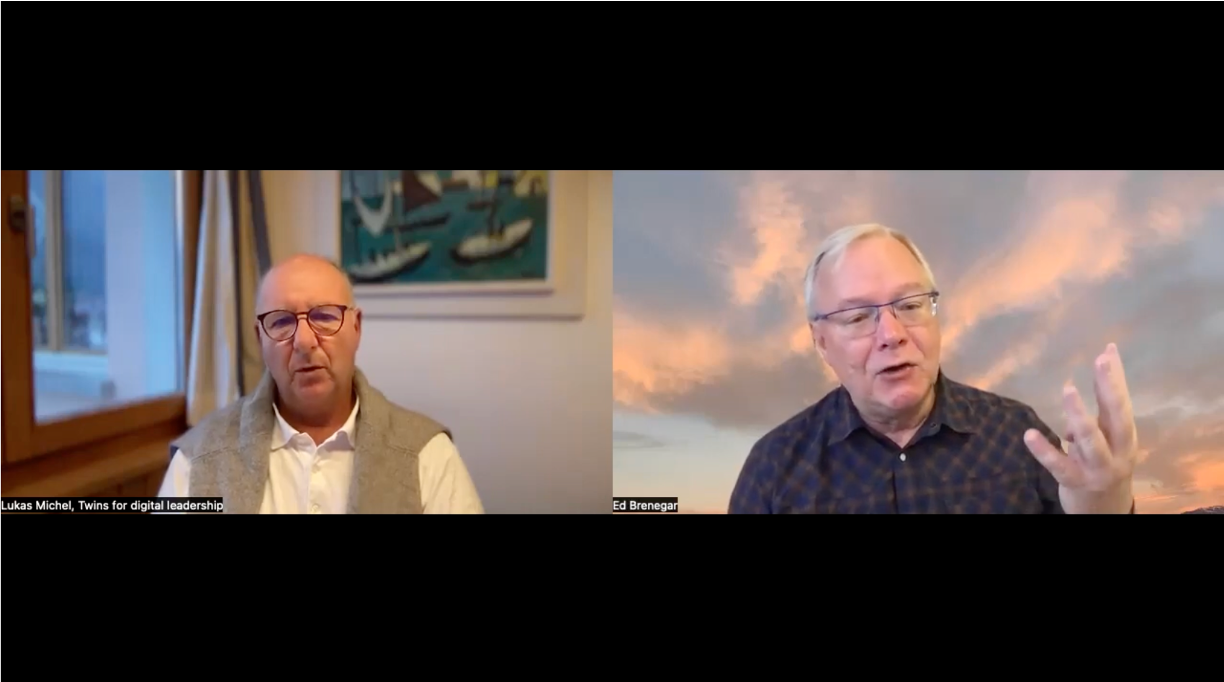
In this conversation with Dr. Ed Brenegar, Lukas Michel reflects on how leaders and organizations can gain clarity before acting on change. The discussion explores how Organization Twins make patterns in management and organization visible—based on real experience rather than assumptions—and why clarity is a prerequisite for meaningful decisions, not a by-product of change.

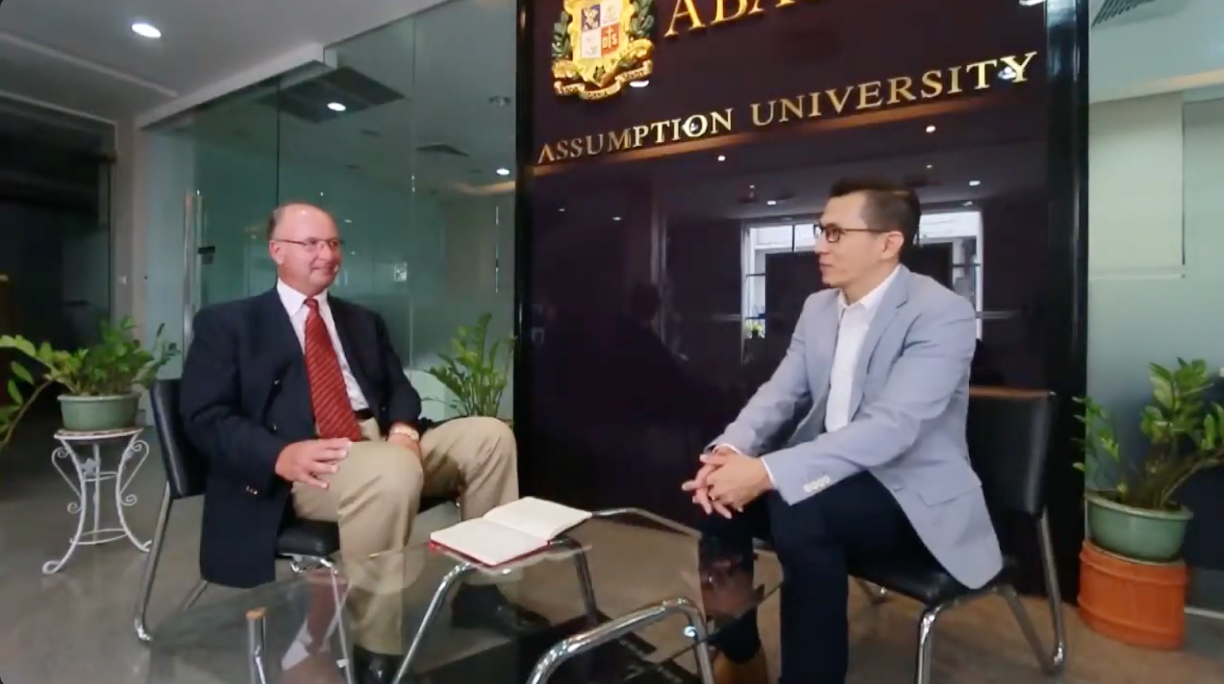
Clarity Before Change — The Origins of the Global Executive Survey and the Guided Clarity Session

Clarity Before Change — The Origins of the Global Executive Survey and the Guided Clarity Session

In this conversation with Dr. Sirichai Preudhikulpradab, Lukas Michel reflects on the origins of the Global Executive Survey and the development of the Guided Clarity Session. The discussion traces how years of research and practical work with leaders led to a diagnostic approach focused on understanding how organizations are actually experienced in practice. Through concrete examples, the conversation shows how leaders use this form of reflection to gain clarity before making decisions or initiating change.